How to Pack Outdoor Backpack: Ultimate Guide for Smart Packing
Packing your outdoor backpack the right way can make or break your adventure. Imagine carrying a heavy, unbalanced pack that makes every step a struggle.
You don’t want that. You want comfort, easy access to essentials, and peace of mind knowing everything fits perfectly. Whether you’re heading out for a day hike or a multi-day trek, learning how to pack your backpack efficiently will save your back and boost your confidence on the trail.
In this guide, you’ll discover simple, proven tips to organize your gear smartly, balance the load, and keep what you need right at your fingertips. Ready to pack like a pro and enjoy every step of your outdoor journey? Let’s get started.
Backpack Types
Choosing the right backpack affects your outdoor trip comfort and success. Backpacks come in many types, designed for different trip lengths and activities. Understanding these types helps you pack smart and carry only what you need. This section explains the main backpack types and key features to consider.
Daypacks Vs. Multi-day Packs
Daypacks are small and lightweight. They hold essentials for short trips or daily hikes. Usually, they have 15 to 35 liters of space. You can fit snacks, water, a jacket, and a first-aid kit in them.
Multi-day packs are larger and built for longer trips. They range from 40 to 80 liters or more. These packs carry sleeping bags, tents, cooking gear, and extra clothes. They often include more support to handle heavy loads.
Choosing between them depends on trip length and gear needs. Daypacks suit quick outings, while multi-day packs fit longer adventures.
Features To Consider
Look for padded shoulder straps and a hip belt to ease weight on your back. Ventilation channels help reduce sweat and keep you cool. Multiple compartments organize gear and make access easier.
Water resistance or rain covers protect your belongings from wet weather. Adjustable straps allow you to customize the fit. Some packs include hydration bladder sleeves for easy water access.
Think about durability, too. Ripstop fabrics and reinforced seams last longer on rough trails. Pick a backpack with features that match your hiking style and trip needs.
Essential Gear
Packing the right gear is key for any outdoor trip. Essential items keep you safe, comfortable, and prepared. Focus on essentials that match your adventure’s needs. Carry only what you need to keep your pack light and balanced.
Clothing And Footwear
Choose clothes that suit the weather and activity. Pack layers to handle changing temperatures. Include a waterproof jacket for rain protection. Bring sturdy, comfortable shoes for hiking. Extra socks help prevent blisters and keep feet dry.
Shelter And Sleeping
Select a lightweight tent or hammock for shelter. Bring a compact sleeping bag suited to the climate. A sleeping pad adds comfort and insulation. Keep everything packed in waterproof bags to stay dry. Set up your shelter early to avoid darkness.
Food And Hydration
Pack high-energy, easy-to-carry foods like nuts and dried fruit. Include meals that need little cooking or preparation. Carry enough water and a reliable filter or purifier. Hydration is crucial to maintain energy and focus. Store food safely to avoid attracting wildlife.
Navigation And Safety
Carry a map and compass even if using GPS. A whistle and headlamp are important for emergencies. Pack a basic first-aid kit with bandages and antiseptic. Know how to use your safety tools before the trip. Keep your phone charged and in a waterproof case.
Packing Basics
Packing your outdoor backpack well sets the stage for a comfortable trip. A good pack helps balance weight and keeps gear accessible. Simple packing basics improve your hiking experience. Understanding key principles makes packing easier and more effective.
Weight Distribution Principles
Place heavy items close to your back and near the middle. This reduces strain and improves balance on the trail. Keep lighter items towards the bottom and outer edges. Avoid putting all heavy gear at the top or front. Proper weight distribution helps prevent back pain and fatigue.
Organizing By Use Frequency
Sort your gear by how often you need it during the day. Pack frequently used items at the top or in easy-to-reach pockets. Store less-used gear deeper inside the pack. Examples include snacks, maps, and rain jackets near the top. Save bulky sleeping gear for the bottom of the pack.
Choosing Stuff Sacks And Bags
Use stuff sacks to group similar items together. They keep your pack tidy and protect gear from moisture. Compression sacks save space for bulky items like sleeping bags. Lightweight mesh bags work well for wet or dirty clothes. Clear bags help identify contents quickly without unpacking everything.
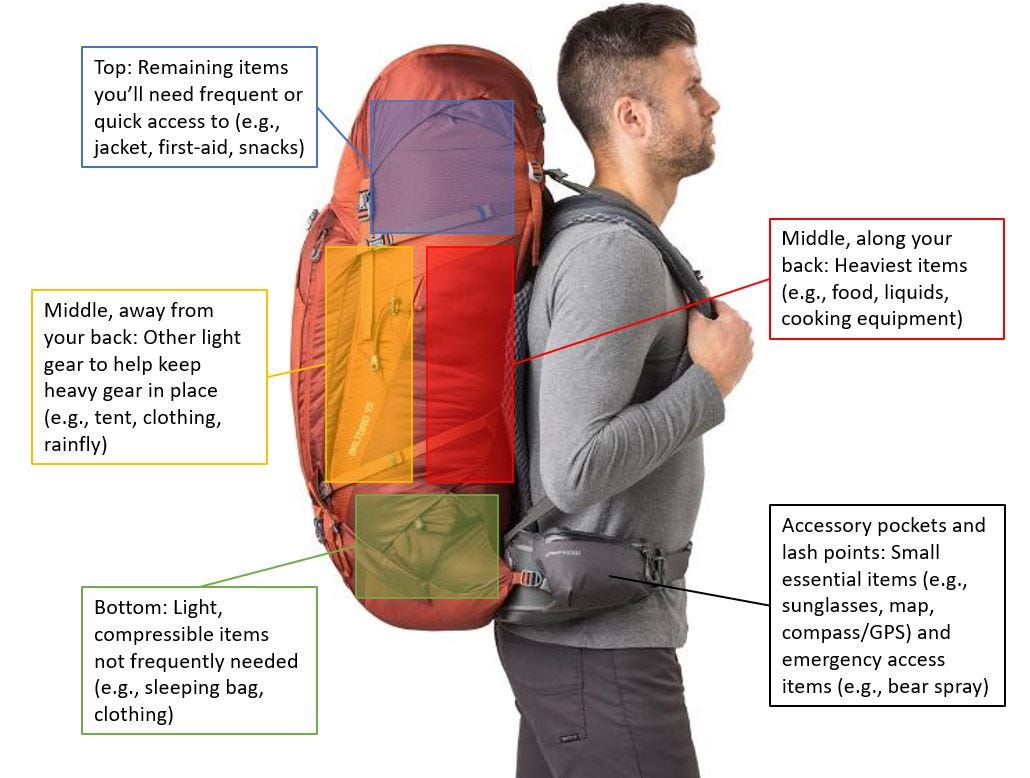
Credit: pangolinswithpacks.com
Packing Order
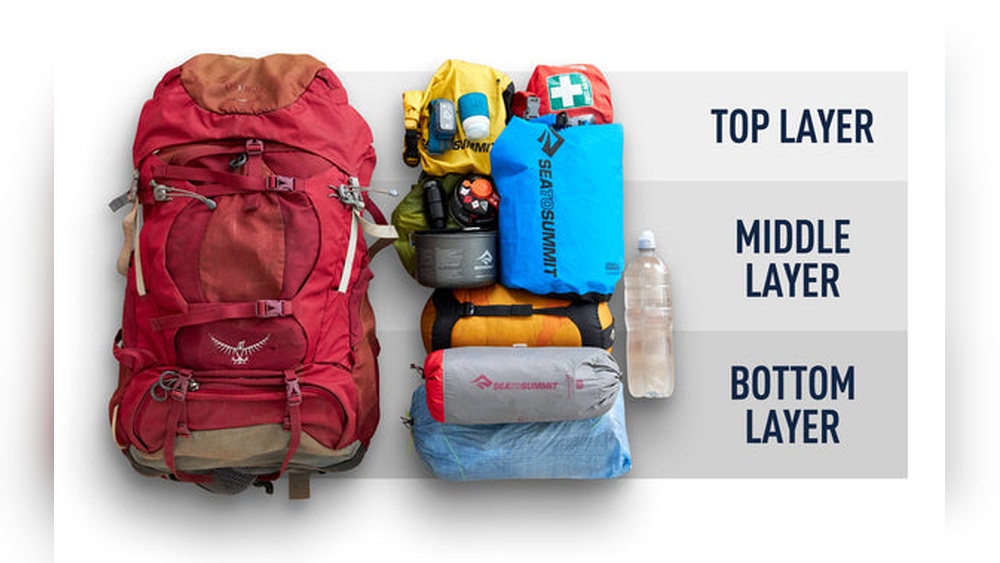
Packing your outdoor backpack in the right order improves comfort and balance. Organizing gear by weight and use keeps your load stable. It also makes important items easier to reach. Follow a simple layering system to pack efficiently.
Bottom Layer: Less Used Items
Place items you rarely need at the bottom. This includes your sleeping bag, extra clothes, and bulky gear. These keep the base stable and do not shift much. Pack them tightly to avoid wasted space.
Middle Layer: Heavy Essentials
Put heavy items close to your back in the middle. This helps keep your center of gravity stable. Examples are water bottles, food, and cooking gear. Packing these in the middle reduces strain on your shoulders.
Top Layer: Quick Access Gear
Keep frequently used items at the top for easy reach. Think of your rain jacket, snacks, and map. Packing these on top saves time and effort during stops. Organize them neatly to avoid digging around.
External Pockets And Attachments
Use external pockets for small essentials like sunscreen and a headlamp. Attach bulky items like trekking poles or a sleeping pad outside. This frees up space inside and keeps things accessible. Balance weight evenly on both sides for comfort.
Load Management
Load management is key to a comfortable outdoor backpack experience. It helps you carry your gear efficiently and reduces strain on your body. Proper load management keeps your pack stable and your back happy during long walks.
Keeping Weight Close To Your Back
Place heavy items near your back. This reduces the pull away from your body. It keeps the pack stable and easier to carry. Items like water, food, and tent poles belong here. Avoid putting heavy things at the bottom or far from your spine.
Balancing Side To Side
Distribute weight evenly on both sides. Uneven loads cause discomfort and affect your balance. Check your pack after loading to ensure one side is not heavier. Shift items as needed for a smooth, balanced feel.
Adjusting Straps For Comfort
Tighten shoulder straps snugly but not too tight. Use the hip belt to transfer weight to your hips. Adjust load lifters to pull the pack closer to your back. Small strap changes can greatly improve comfort and control.
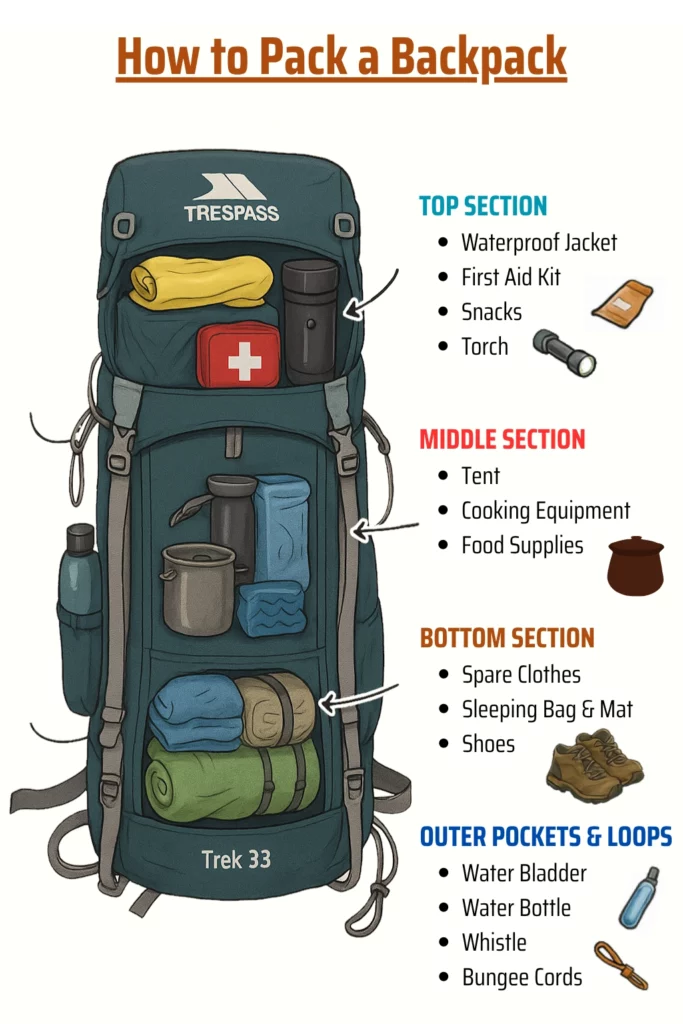
Credit: www.trespass.com
Special Tips
Packing an outdoor backpack requires special care to keep your load balanced and accessible. Smart packing improves comfort and safety on the trail. Here are some useful tips to make your packing efficient and stress-free.
These tips cover different trip types, weather changes, and packing methods. They help you stay prepared without carrying extra weight or bulk.
Packing For Overnight Trips
Overnight trips need careful planning. Pack your sleeping bag and tent near the bottom of the pack. These items are bulky but used only at camp. Keep your cooking gear and food in the middle section for balance. Store clothes and personal items on top for quick access. Place essential items like a headlamp and first aid kit in side pockets or outer compartments. This keeps them handy during the hike.
Adapting For Weather Conditions
Weather can change fast outdoors. Pack rain gear and extra layers in waterproof bags. Keep them near the top or in external compartments. This lets you reach them quickly during sudden rain or cold. Use a pack cover to protect your gear from moisture. If you expect hot weather, pack light and breathable clothes. For cold weather, add insulated layers and a warm hat. Adjust your packing list based on the forecast and season.
Using Compression Techniques
Compression helps save space and stabilize your load. Use compression sacks for your sleeping bag and clothes. These sacks reduce volume by squeezing out air. Tighten the pack’s compression straps to keep items from shifting. Pack heavier items close to your back to improve balance. Distribute weight evenly between left and right sides. This reduces strain and improves your hiking posture.
Final Checks
Final checks are essential before setting off on your outdoor adventure. They ensure your backpack is comfortable, balanced, and easy to use. Taking time for these checks helps avoid discomfort and frustration on the trail.
Test Wearing And Adjustments
Put on your backpack and walk around for a few minutes. Feel how the weight sits on your back and hips. Adjust the shoulder straps to fit snugly but not tight. Tighten the hip belt to shift weight to your hips. Use the chest strap to stabilize the load. Make small changes until the pack feels steady and balanced.
Accessibility Review
Check if you can reach essential items quickly. Place your map, snacks, and first-aid kit in outer pockets or top compartments. Make sure zippers and buckles open smoothly. Avoid packing important gear deep inside. You want to grab what you need without unpacking the whole bag.
Weight And Comfort Assessment
Lift your packed backpack and notice the total weight. It should feel manageable for your strength and hiking plan. Walk a short distance to test comfort over time. If it feels heavy or pulls unevenly, repack heavier items closer to your back. Balance is key to prevent strain and fatigue.
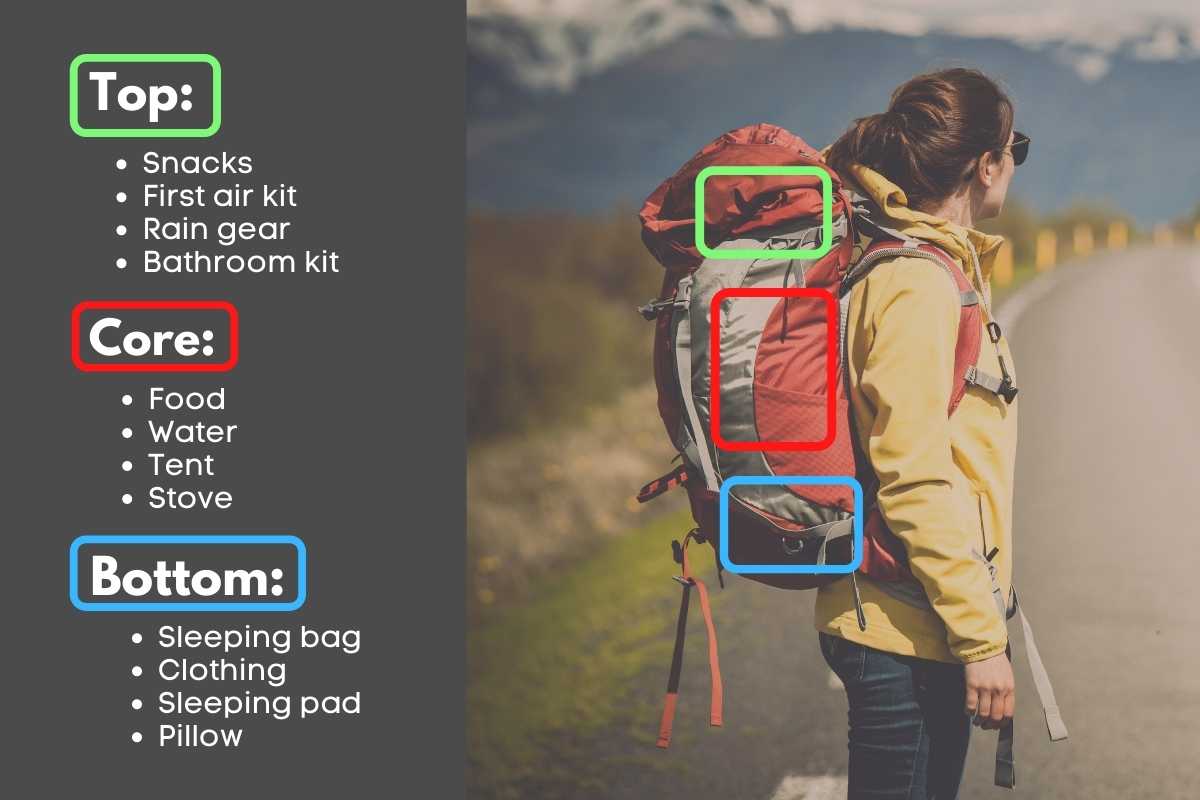
Credit: www.thecrazyoutdoormama.com
Frequently Asked Questions
What Is The Best Way To Pack An Outdoor Backpack?
Start with heavy items close to your back for balance. Pack lighter gear at the bottom. Keep essentials like snacks and maps in easy-to-reach pockets. Distribute weight evenly to avoid strain during hiking or outdoor activities.
How Do I Organize Gear Inside A Backpack?
Group items by use and frequency. Place sleeping gear at the bottom, cooking tools in the middle, and frequently used items on top or outer pockets. Use compression sacks to save space and keep gear secure.
How Can I Reduce Backpack Weight Effectively?
Choose lightweight gear and only pack essentials. Avoid duplicates and bulky items. Use multi-purpose tools and pack clothes suitable for varying weather. Proper packing techniques also help distribute weight efficiently.
What Items Should Be Easily Accessible In A Backpack?
Keep first aid kit, map, flashlight, snacks, and rain gear in external or top compartments. These items are crucial for quick access during emergencies or sudden weather changes.
Conclusion
Packing an outdoor backpack well makes your trip easier and safer. Keep heavy items close to your back to stay balanced. Store less-used gear at the bottom to save space. Put essentials like snacks and maps where you can reach them fast.
Adjust straps for comfort before you start walking. With smart packing, you can focus on enjoying nature. Remember, a well-packed backpack supports a great outdoor adventure.
I am an outdoor enthusiast and gear researcher passionate about camping, hiking, backpacking, and outdoor adventures. I enjoy testing gear, comparing products, and sharing practical advice to help readers make informed decisions. At BestOutsideGear, I create honest gear reviews, buying guides, and outdoor tips to help adventurers choose the right equipment with confidence.